The Wheel hasn’t given me many choices, and the ones that I’ve made have left me here.
— Dana
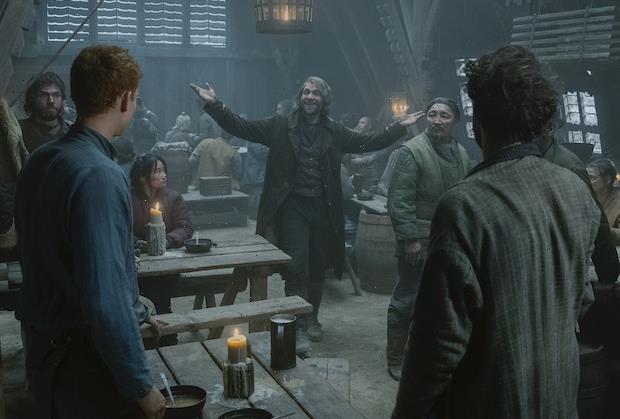
A much more fractured episode than its predecessors. We witness our travelling group divided into three geographies and stories, and the quality suffers as a result. The almost total absence of Moiraine underscores how much of the show’s allure she is responsible for.
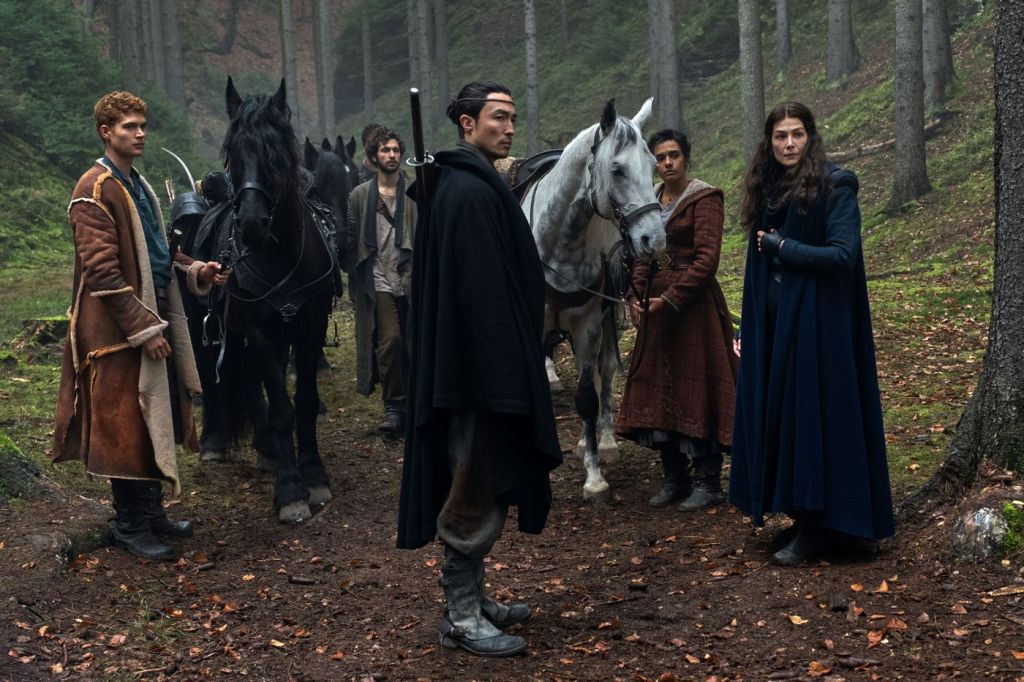
What does work are the stunning locations which have become an additional cast member: each setting shaping the distinct character of the journey. The verdant forest that hosts Moiraine, Lan and Nynaeve evokes nature’s life-giving, balancing force – their journey is one of healing. The abundant green moss and lush trees are a feast for the eyes and cruel contrast to the flesh rotting at Moiraine’s shoulder. Nynaeve’s skill and power as a Wisdom only goes so far (despite sporting that emerald coat). She can renew Moiraine’s energy temporarily but it’s clear the Sisters’ healing powers are needed for Moiraine to survive. The relationship between an Aes Seddai and her warder is hinted at by some quite clumsy exposition from Nynaeve – apparently a Warder is so entwined with his Aes Seddai, he feels what she feels. How literally this should be interpreted remains unclear as Moiraine’s ‘unbearably painful’ treatment barely makes Lan grimace (or is this just medieval macho posturing?)
A cold mountainous wasteland is fitting backdrop to the most sparse and empty storyline: Perrin and Egwene’s trek to nowhere. The wolves hound them night and day, apparently leading them to the edge of a misty forest. There, they meet the friendliest group of people a stranger could hope to encounter. The Travelling People feel like a lazy comparison to the Roma and there is an overdone bucking of stereotypes i.e. ‘The people who [are known to] steal your gold and your children’ but are actually lovely and want nothing more than to give you free lentils.
The most interesting story thread is Rand and Mat’s diversion into a gritty, dark mining town. They stumble into a tavern with a welcoming, enchanting host – Dana. We watch as she teases and compliments each in turn, Rand’s dedication and Mat’s humour, all the while a slightly sinister sense builds. During this time, Mat is also robbed by a Gleeman, a travelling bard-type, who optimistically refers to his theft as a ‘life lesson’. Yet, it’s when their lives are at stake, Mat and Rand learn the real lesson of this town – how deceptive appearances can be. We’re constantly reminded that first impressions count but this world has a very different take. Dana is outwardly friendly and generous yet she tries to trap Rand and summons an Eyeless to take him away (how does one summon an Eyeless exactly? It’s not like they get good phone reception in the netherworld). The Gleeman robs Mat on sight but ends up saving his and Rand’s life when he puts an arrow through Dana’s throat. Her death turns into one of the most memorable cut scenes so far, her blood billowing out into a muddy pool and morphing into the trees at the culmination of Moraine, Lan and Nynaeve’s journey.
Dana also tells us there are five possible Dragons. A revelation made real as we see our final potential, caged and likely headed for an untimely death. We are left wondering if Moiraine has enough strength left to save him, or if he even should be saved. Why do male channellers go mad? Has the the duality of power, Light and Dark, male and female, been disrupted somehow? Perhaps the community of the Aes Seddai help quell the dangers of women wielding the One Power whereas the solitary male channellers go mad from holding the burden of power alone. After all, there is strength in community and in sisterhood.
 Show. Interpreted.