A round-up of the best year for television in a long time, from off-the-wall dark comedies to mind-bending sci-fi. Despite the intense competition, five shows stood apart from the crowd. … Continue reading Top 5 TV Series of 2022
A round-up of the best year for television in a long time, from off-the-wall dark comedies to mind-bending sci-fi. Despite the intense competition, five shows stood apart from the crowd. … Continue reading Top 5 TV Series of 2022
Love’s usually a bad idea. Still, we allow it to happen, or this life would be intolerable.
— Stephin
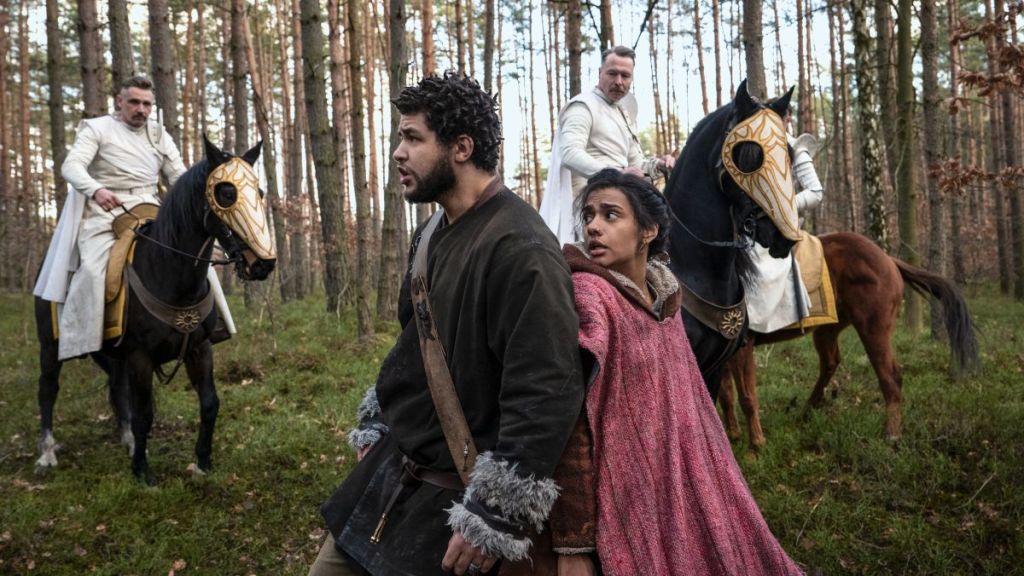
An uneven episode with moments of real tension – and moments that can feel contrived and overly indulgent. We begin in the city of Tar Valon a month after where we left off. Once again, the sets are stunning. The cityscape is an intricate display of white stone, rainbow decor and wildlife from around the world. The inhabitants are bedecked in glistening tunics, and wealth and prosperity seem to drip from every corner.
We spend a significant amount of time on the posthumous bond between an Aes Sedai and her warder. Which would be fine if it served the wider story but Stephin’s (Peter Franzén) crippling depression without Kerene (Clare Perkins) leaves the audience mostly cold. Afterall, we barely know them. The gravitas of these events isn’t fully felt until we see Lan’s self-composure shatter. Perhaps out of guilt (from what was essentially a failed suicide watch) or grief Lan’s deconstruction is gutwrenching. And all the more so for the unspoken mutual pain between him and Moiraine. There must be a reason we are seeing all this – will the bond between Moiraine and Lan be threatened? Will they lose each other? The nature of their relatonship does not appear romantic or sexual (although that is definitely an option going by the friskiness of the sexy Aes Sedai-warder triad). Stephin describes love as what makes life tolerable, a definition Lan quickly dismisses. This suggests Lan values other things more, like duty and purpose. Yet their exchange could be more prescient, foreshadowing the challenges to come. Perhaps it will be love that comes between Lan and Moiraine.
There are things worse than death and apparently one of them is madness, as Mat asks Rand to kill him before he becomes like the false Dragon. While madness is a useful plot device and Mat’s fear feels very real, it is a rather hackneyed portrayal of mental health where hearing voices is the biggest bad imaginable. The reality is up to one in ten people will hear voices in their liftetime and of those who do, some would not be considered clinically ‘mad’ as the voices do not cause them distress. There is also the possibility of recovery – either through silencing the voices or finding a way to co-exist with them. But, granted, it is medieval fantasy and the madness is interwoven with the magical contamination of the One Power.
It’s become more clear that flat characterisation is the result of bad writing, rather than bad acting. When Nynaeve (Zoë Robins) tells Rand (Josha Stradowski) about how Egwene’s tenacity ensured her survival from a gruesome childhood illness, it’s emotionally pitched to have an impact but Rand’s cheesy one-liner ‘sounds about right’ tunes the audience out. This episode tries to breathe life into Egwene’s character but honestly it feels like hot air. We get a tired fiesty-girl-from-the-village stereotype with very little to substantiate it. Her tough talk against Valda, the Children of Light captain, comes out of nowhere and it is Perrin that eventually saves their sorry asses.
But while the Wheel of Time may lack character development, it does give us nail-biting tension. Egwene and Perrin’s predicament looks dire – we know Valda is brutal and out for blood and Egwene’s powers are in their infancy. She tries to appeal to his own principles, ‘a man of the Light cannot kill a girl who’s done nothing wrong!’ but the righteous have a unique ability to the twist truth to suit their own agenda. Like any religious fundamentalist, Valda is utterly convinced that his understanding of the divine is the understanding of the divine. He believes that humans were never meant to access the One Power and that any ‘witches’ who touch it ‘walk like gods amongst men’. The irony being that in his enforcement of these beliefs, he wields more power than the people he condemns (even the Aes Sedai). Of course, it is also the gall of these women, these ‘witches’ to believe they are somehow above men. It does not seem like too far a stretch to think that whoever Valda encountered, able to touch the source or not, would have been subject to his torture and denunciation. Those who are dogmatically ‘guided’ by the divine, like Valda and Dana, appear to be the most dangerous – whichever side they are supposed to serve. So much so that the differences between spiritual opposites – Light and Dark – seem not so great at all.
The Wheel doesn’t want us to do better, it wants nothing. It is like saying the rain wants something.
— Moiraine
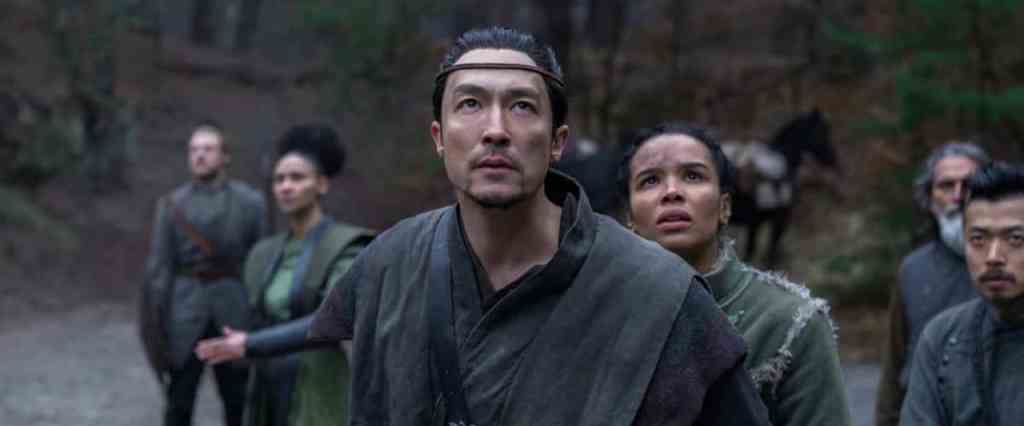
Nynaeve is the Dragon Reborn! The idea that Nynaeve numbered amongst the potentials had already been hinted at: she was young and already in a position of power as village Wisdom, survived two battles and could track Lan. Her power is ferocious – a ‘raging sun’ as promised – yet it is a healing rather than a destructive force. Almost getting eating by a trolloc and stabbed by Logain’s army couldn’t provoke her powers. Nynaeve knew Moiraine was dying but again…nothing. But seeing Lan’s throat slashed unlocks her identity. She cares for Lan, perhaps even romantically if those hooded looks are anything to go by, and this seems to make the difference. She respects him too, readily admitting that he is much more than the ’two-legged lapdog’ she originally took him for. When his death seems near certain, her agony allows her to tap into her power and restore his life. It seems it is the people we care for that inspire the greatest acts. Attested to first by The Traveling Woman’s vow of non-violence to honour her daughter’s death and then by Nynaeve’s transformation.
Of course the Dragon reborn had be a woman. If this world works in dualities, as the Dark and the Light would suggest, than a female dragon must follow a male. The gender flip also aligns with the legend surrounding the Dragon Reborn as healing the world rather than breaking it, like the first Dragon. Since The Dark One contaminated the One Power so that male channellers cannot wield it without going mad, a female Dragon seems the only answer.
Moiraine knows almost immediately that Logain is only a pretender and a shadow of the Dragon reborn. Unlike the King who Logain turned to his cause with mercy and vague promises for a better future, Moiraine cannot be so easily beguiled. She sees through the shallow optimism that The Wheel itself wants to do better this time. The Wheel is an impersonal force that shapes the world, much like the elements or nature itself, and to ascribe it an anthropomorphic will is nonsense. This feels like a direct dig against the monotheistic religions and the faith they place in a God who acts in the world. The Wheel of Time is more akin to ancient, and modern, spiritual thinking that understands our lives as structured by a kind of universal energy. As more is revealed about The Wheel, the less we know for certain. It is mysterious and potent; an endless flow of energy and life. But rather than an immediate cycle of reincarnation The Wheel is described as being the source and returning point for all conscious beings who will only eventually be reborn into the world (it took thousands of years in the case of the Dragon). Logain’s lack of wisdom exposes him for what he is – another male channeller on the edge of madness. Fitting then that the Dragon Reborn herself is known as a Wisdom, wise beyond her years.
The Wheel hasn’t given me many choices, and the ones that I’ve made have left me here.
— Dana
A much more fractured episode than its predecessors. We witness our travelling group divided into three geographies and stories, and the quality suffers as a result. The almost total absence of Moiraine underscores how much of the show’s allure she is responsible for.
What does work are the stunning locations which have become an additional cast member: each setting shaping the distinct character of the journey. The verdant forest that hosts Moiraine, Lan and Nynaeve evokes nature’s life-giving, balancing force – their journey is one of healing. The abundant green moss and lush trees are a feast for the eyes and cruel contrast to the flesh rotting at Moiraine’s shoulder. Nynaeve’s skill and power as a Wisdom only goes so far (despite sporting that emerald coat). She can renew Moiraine’s energy temporarily but it’s clear the Sisters’ healing powers are needed for Moiraine to survive. The relationship between an Aes Seddai and her warder is hinted at by some quite clumsy exposition from Nynaeve – apparently a Warder is so entwined with his Aes Seddai, he feels what she feels. How literally this should be interpreted remains unclear as Moiraine’s ‘unbearably painful’ treatment barely makes Lan grimace (or is this just medieval macho posturing?)
A cold mountainous wasteland is fitting backdrop to the most sparse and empty storyline: Perrin and Egwene’s trek to nowhere. The wolves hound them night and day, apparently leading them to the edge of a misty forest. There, they meet the friendliest group of people a stranger could hope to encounter. The Travelling People feel like a lazy comparison to the Roma and there is an overdone bucking of stereotypes i.e. ‘The people who [are known to] steal your gold and your children’ but are actually lovely and want nothing more than to give you free lentils.
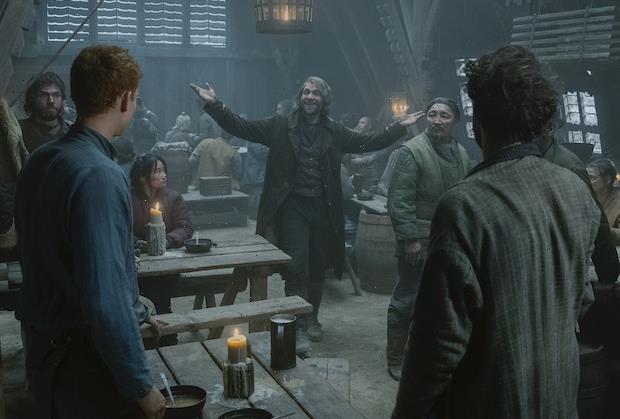
The most interesting story thread is Rand and Mat’s diversion into a gritty, dark mining town. They stumble into a tavern with a welcoming, enchanting host – Dana. We watch as she teases and compliments each in turn, Rand’s dedication and Mat’s humour, all the while a slightly sinister sense builds. During this time, Mat is also robbed by a Gleeman, a travelling bard-type, who optimistically refers to his theft as a ‘life lesson’. Yet, it’s when their lives are at stake, Mat and Rand learn the real lesson of this town – how deceptive appearances can be. We’re constantly reminded that first impressions count but this world has a very different take. Dana is outwardly friendly and generous yet she tries to trap Rand and summons an Eyeless to take him away (how does one summon an Eyeless exactly? It’s not like they get good phone reception in the netherworld). The Gleeman robs Mat on sight but ends up saving his and Rand’s life when he puts an arrow through Dana’s throat. Her death turns into one of the most memorable cut scenes so far, her blood billowing out into a muddy pool and morphing into the trees at the culmination of Moraine, Lan and Nynaeve’s journey.
Dana also tells us there are five possible Dragons. A revelation made real as we see our final potential, caged and likely headed for an untimely death. We are left wondering if Moiraine has enough strength left to save him, or if he even should be saved. Why do male channellers go mad? Has the the duality of power, Light and Dark, male and female, been disrupted somehow? Perhaps the community of the Aes Seddai help quell the dangers of women wielding the One Power whereas the solitary male channellers go mad from holding the burden of power alone. After all, there is strength in community and in sisterhood.
The lady does shoot fireballs, so let’s try and stay on her good side.
— Mat Cauthon
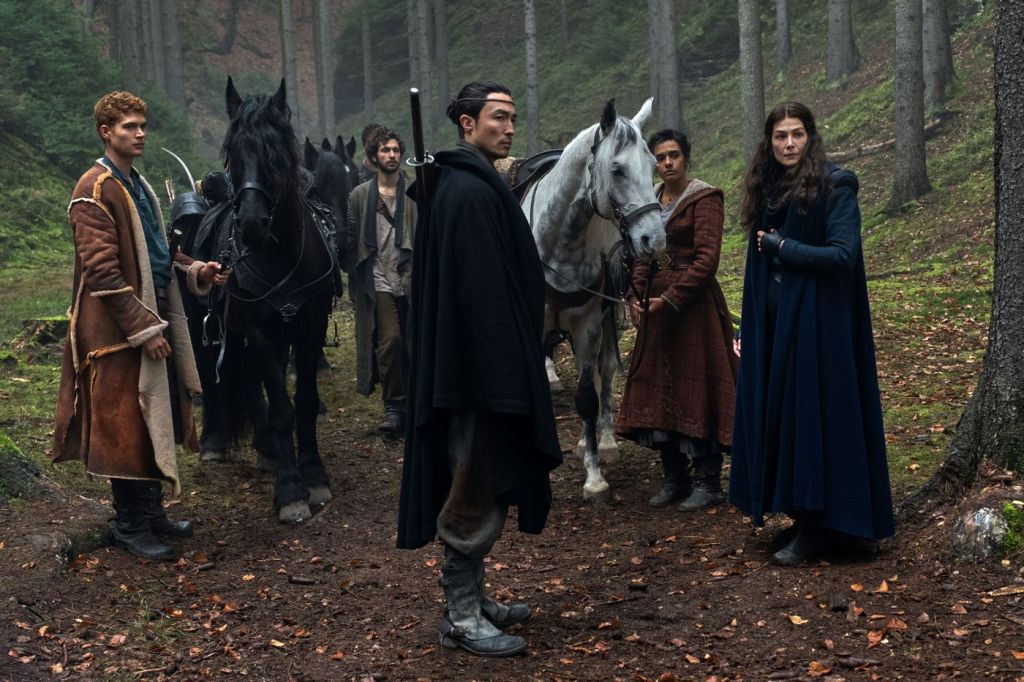
The second episode starts explosively. A terrified child, a vampiric army captain and a woman burning alive. ‘There’s a brutality to the dish’, the captain intones as he eats, banner-waving his own violent disposition. Half inquisitor, half witchhunter, Eamon Valda (Abdul Salis) of the Children of Light torments and burns his Aes Seddai captor – an execution made more lurid as we watch it reflected in his goblet and then blotted by his bloody fingers. A classic and effective piece of cinematography that could ask whether the captain is more akin to a vampire, without soul or reflection, who lusts for blood? He is, after all, deluded enough to think that brutality and mercy could ever co-exist.
The episode also complicates this world’s politics in enticing ways. It makes very clear that not everyone follows the Aes Seddai. In fact, they are hunted as witches and enemies to the Light. It seems that calling yourself a follower of the Light does not make it so. Later, Moiraine crosses paths with the captain and the rest of the army of the Children of Light. She quickly removes her ring (to avoid having her hand removed entirely) and speaks around who she is. She does so convincingly and is allowed to continue her journey. Afterwards, Egwene accuses Moiraine of oath-breaking and lying to the captain. However, Moiraine is at pains to point out, ‘we will always tell the truth. It just may not be the truth you think you hear, so listen carefully’. This encapsulates both the importance of oaths and their flexibility. Oaths are clearly sacred in this world (consider what happened to the Fallen City when they betrayed an oath to aid their allies) but these oaths bend rather than break in the wind. This allows Moiraine to share just enough truth with the captain to keep his suspicions at bay but not so much that she endangers her life and the lives of those around her.
The captain’s hunt for the Aes Seddai goes to the heart of the female paradox. To obtain power as a woman is the only way to gain true independence yet power (or even ostensible power, as is the case with the 17th century witch trials) also makes you extremely vulnerable to persecution. In any time, and any world, it appears that being a woman, perhaps particularly one with authority, makes you a target.
The mysterious One Power the Aes Seddai draw on and the Light and the Dark the world is caught between seem to mimic, respectively, the single deity and dual deities of modern Wicca. Wicca is a diverse set of beliefs and Wiccans can view the divine as one impersonal force or embodied in dual deities: the Lord and the Lady. This gendered duality repeats itself in the the male and female channelers of the One Power. Perhaps implying that, in this world, the two and the one are inextricably bound together. This is a rather taoist understanding (an Ancient Chinese philosophy Wicca has been linked to) which encompasses both the Tao, an ultimate oneness which is the source of everything, and yin-yang, an idea of opposing yet interdependent forces.
Within this context, The Two Rivers (where our young protagonists hail from) could be seen to refer to the two forces of this world – the Light and the Dark – a creative dichotomoy that explains the Dragon’s rebirth there. Taoism teaches that within one energy, there is the seed of its opposite and perhaps this approximates Moiraine’s own ideology as she believes that in the reincarnation of the one who broke the world, the Dragon, is the beginning of the world’s saviour.
Your life isn’t going to be what you thought. You’ve lived too long in these mountains, pretending what happens in the rest of the world won’t affect you.
— Moiraine
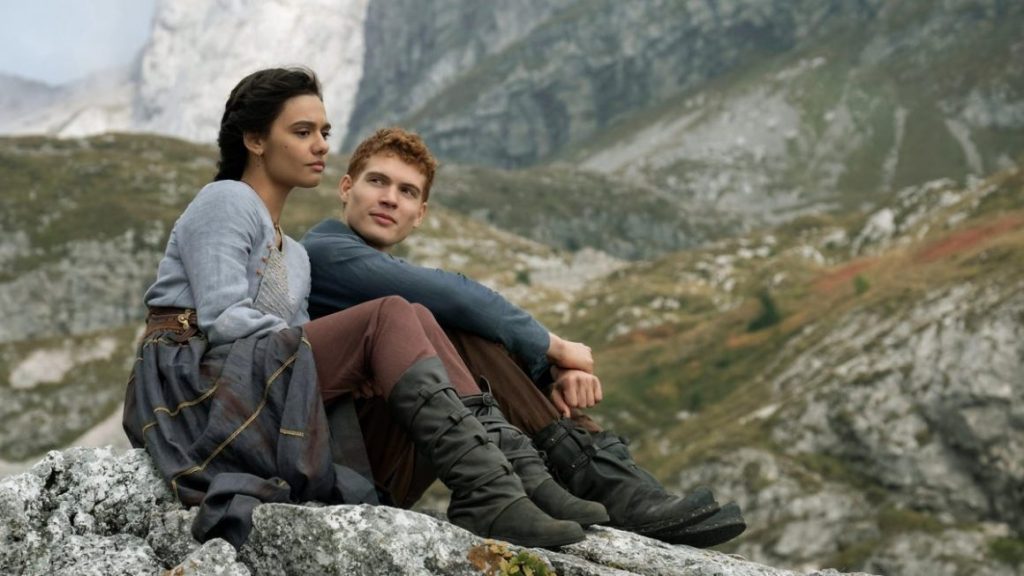
The Wheel of Time lays the groundwork for a well-worn fantasy trope – the ultimate battle between good and evil (here, ‘light’ and ‘dark’) where only the chosen one can bring salvation. The subversion here is a matriarchal council of wise women known as the Aes Sedai who wield great power, and the fact there are four competing candidates for our hero(ine), known as the ‘Dragon’ reborn.
The exposition comes thick and fast over this first installment. The Eyeless, the Aes Sedai, the Wisdom, the Light, trollocs – there’s barely a moment to take in the breathtaking landscape (cue en-masse googling of ‘where is The Wheel of Time shot?’). Despite this terminology vomit, the show weaves a foreboding and mystical atmosphere over the course of its 50 minute run-time. Rosamund Pike excels as the austere and intimidating Moiraine who humanises her just enough as she searches for the Dragon with her warrior companion, Lan. Her search leads her to the Two Rivers, a small village in the mountains.
There are several comments about the remoteness of the town in both geographical and political terms – what happens elsewhere never seems to affect the villagers. Perhaps this is a barb about communities, or individuals, that attempt to cut themselves off from the wider world’s concerns. In the end though, the world comes to you. Moiraine is here for the four young villagers who have come of age. Personal transformation beckons as we turn away from youth, teetering on the precipice of adulthood, and this is mimicked by the stark shifts the protagonists – Egwene, Rand, Mat and Perrin – face.
Egwene and Rand are young, beautiful and in love, surely enough to ensure a doomed future together. Egwene passes through her ceremony into womanhood, symbolised by her braided hair (a nice nod to the spiritual significance hair can hold, notably in Sikhism and Islam), and then has sex with her childhood love Rand, only to tell him they will never marry. She is set on the life of a Wisdom. A ‘lonely life’, as Rand reminds her, without husband or children, existing as a kind of feminine incarnation of the catholic priesthood. Mat and his family are dirt poor (dirt being the operative word, his younger sisters have all but taken a mud bath) and he has to resort to stealing from acquaintances to survive. Perrin is given less backstory – he seems strangely interested in Egwene but also has a wife who he (proclaims) he loves, and then unintentionally kills soon after. No doubt such a dark and unfortunate act will weigh heavily on his conscience.
The episode crescendos when the town is attacked by a small army of trollocs – a three-way gene splice between an orc, a devil and a goat. There is carnage, terror and some very questionable CGI effects. Visualising magic is always a challenge, but this attempt feels more half-baked than most. Moiraine throws pulsating lightning rods at the enemy while villagers alternate between fleeing and fighting hysterically. Rand’s father is surprisingly skilled with a portent-bearing sword – hinting at secrets in their family history. After barely scraping through alive, Moiraine and the four potential Dragons must leave abruptly and journey to the White Tower to find safety. An uneven yet captivating beginning to their journey into the Darkness and the Light.
The world that Ragnar Lothbrok promised you. And his son, Ubbe, has delivered to you.
—Alfred
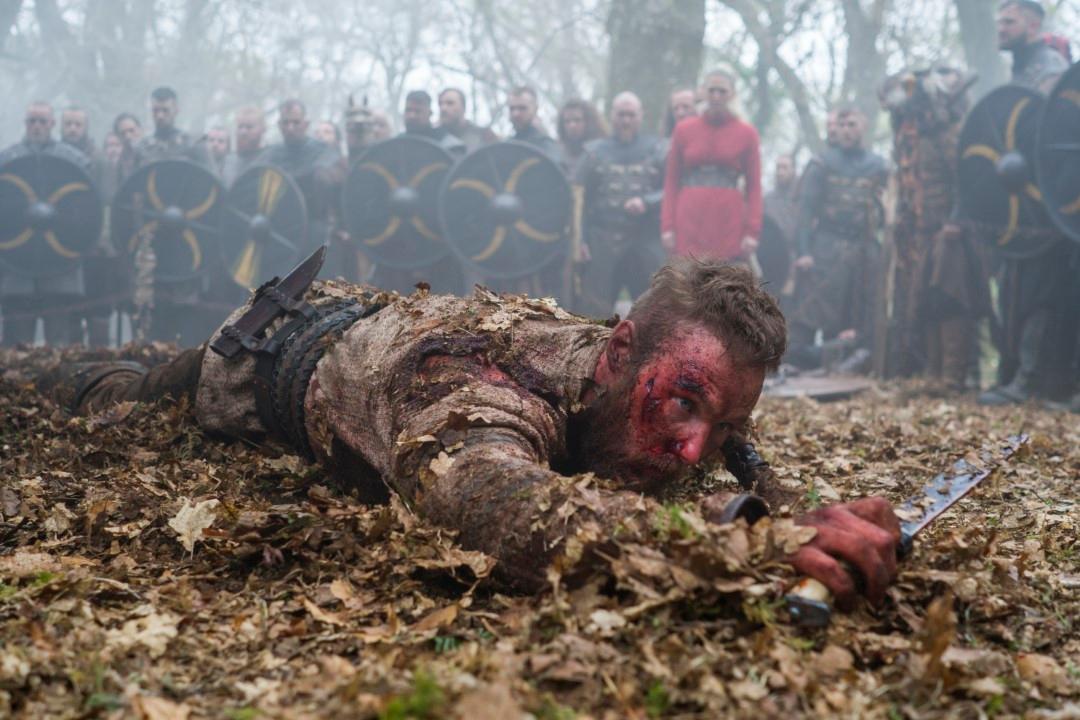
The multiple threads of the season finally coalesce in What Happens in the Cave. While it might not draw the smoothest connections, the pace moves quickly and provides some satisfying conclusions across the board.
In an ironic twist of fate, Ubbe’s faith is restored just as Floki’s looks set to flounder. During their grisly, ungraceful fight, King Frodo floors Ubbe and Ubbe speaks straight to Odin. Afterwards, he describes the spirits of the Norse Gods working through him to Torvi and how he views his cross as a decorative addition and little more than that. Finally, we get the true meaning behind Ubbe’s forays into Christianity. This hasn’t been some kind of spiritual quest but, rather, an exploration of what the religion can do for him. Highly reminiscent of Ragnar’s faked conversion to smuggle his ‘dead’ body into Paris and instigate the city takeover that had previously eluded him. King Frodo and Ubbe’s fight is a messy, tense affair that creates genuine fear for Ubbe’s life before delivering his (oh so welcome) victory. Yet again, a son of Ragnar’s proves himself worthy of the hype.
In contrast, Floki’s journey to the centre of the earth in what he sees as the most sacred place to the Norse Gods ends in…a cross. Athelstan’s final fuck you. Floki half laughs, half cries as he realises he cannot escape the Christian God. Not even in Iceland, the supposed place of the Gods. His entire spiritual quest appears to be for naught. Well, unless you count a depressingly large death toll and cannibalistic side action (before his death, Eyvind resigns to just being ‘meat’ now). What will this mean for Floki’s faith? It is telling that Ubbe’s belief is renewed by the sweat and gristle of battle while Floki’s fragments in peaceful soul-searching. Norse paganism was forged from an idealisation of battle and that may well have been its downfall in a world where others were waking up to the fact that war is bad for business. Whereas Christ’s exaltation to ‘love thy neighbour’ lends itself to a more peaceful, economically prosperous environment, Norse mythology literally bars the door to Valhalla unless you die axe in hand.
‘The world that Ragnar Lothbrok promised you. And his son, Ubbe, has delivered to you.’ At last, we see the beginnings of a full Norse settlement that will pave the way for a total marrying of the Saxon and Viking worlds. Ubbe’s negotiation has bloodlessly sidestepped conflict and shown the Vikings to be, as King Angantyr says, much more than ‘savages’, emphasising too the multifarious nature of different cultures. The Vikings may be known to the Saxons as ruthless raiders, but they can also be, for the right piece of land, peaceful farmers.
We also see the story of Laegartha’s disappearance, her despair and injury forcing her from the battlefield to the house of an old, Saxon woman. This woman tells her to forget her old life as she cuts off her long, warrior locks, again emphasising the transformative power of hair for the series (see The Buddha). It’s clear that Laegartha’s shield maiden days are over and, if Ragnar’s demise is anything to go by, her days may be numbered. There has been extensive criticism of how Ragnar was ‘diminished’ leading up to his death but doesn’t age, eventually, diminish us all? Even Laegartha – beautiful, formidable, insightful, warrior she is – cannot escape its clutches and there’s some wider, inherent sense of justice to that.
We are all trying to defend Ragnar’s dream but perhaps some of us choose to do it differently.
— Björn

I can’t remember the last time Björn was so insightful. We find here all of Ragnar’s sons treading very different paths, each living his own incarnation of Ragnar’s dream.
Björn himself has been a caged bear for too long now. Pacing up and down the villa at Wessex, brooding in the corner, fucking royalty and (likely) bitching about his feather down pillows. He has no interest in winning Alfred’s trust or integrating into the English court. Ubbe has hardly been hob-knobbing with the bishops but at least the man is making an effort.
One thing Björn can be relied upon to do though is attract women. He finds himself with Gunnhild, a beautiful and fierce shieldmaiden in a scenario which echoes his first (and I would venture only) love, Thorunn. Both women openly acknowledge their lack of agency (Thorunn, a slave and Gunnhild, an imprisoned free woman), yet both genuinely desire Björn. For all his unearned fame as Ragnar’s son, he does have a powerful, charismatic presence and a natural inclination to lead. His departure from East Anglia comes as no surprise but his final farewell to Torvi is unexpectedly touching. Just as Ragnar paid final tribute to Auslaug, who was the mother of his sons but who he failed to truly love, Björn expresses his own thanks to his former lover who bore his children as well as the brunt of his temper. This apology hints at a self-awareness I have sorely missed from Björn while the similarities with Ragnar’s farewell prompts the question – is the beginning of the end for Björn?
So far, Hvitserk’s story has failed to inspire. He abandoned Ubbe, a brother he loved, to join Ivar, who can now only be described as a classic psychopath. When probed by Ubbe to explain this train wreck of a decision, he offered little more than ‘fate’. Despite Ivar’s win over Björn and Ubbe and acquisition of Kattegat, Hvitserk seems to wield little actual power and suffers under increasingly serious threats from his brother. Yet, here is a glimpse of something more in store for the most forgotten of Ragnar’s sons. Like his father, he has a curiosity for the world around him, transmuted into the Buddha totem he discovers at the market. Hvitserk is soon swimming in the mysteries and dichotomies of the doctrine and turning over the concept of oneness. It is this interest in the other which further claws at the rift between him and Ivar, who calls his attempt at mysticism ‘crazy’ and threatens him with the same brutal treatment that befell Margrethe.
Ragnar described himself as ‘a very curious man’ to Ecgbert, which often manifested itself as spiritual curiosity – he was continually eager to learn what new cities, what new Gods lay in wait over the horizon. It was this curiosity that fuelled his conversations with Athelstan and allowed him to learn, for instance, to attack on Sunday as the people would be unarmed and at church. This episode seems to draw a line of comparison between Hvitserk and his father – if he is sufficiently curious, perhaps he will also go on to achieve great things.
On the other hand, Ivar is proving himself more and more of a disappointment to Ragnar’s legacy. He no longer asks questions, preferring to bark orders. While his insistence at divine adulation is bizarre, it is also a fundamental block to increasing his reputation and status. If he is a God, he can do no wrong and he has nothing to learn. Any man who thinks he has nothing to learn is damned to a parochial existence at the least and death at worst, remember how Earl Haraldson’s refusal to raid West in Season 1 ended?
Finally, Ubbe. He has achieved what his father could not – farm land in England. After all, Ragnar was a farmer before a warrior and the greatest treasure he saw in this new land was not its rich (and undefended) churches but its fertile soil. But Ubbe has also assimilated far more than Ragnar ever did, exemplified by him and Torvi taking communion alongside the king. Of course, Alfred is also a different, far more trustworthy man than Ecgbert – as too, it seems, is Ubbe. Where Ragnar and Ecgbert both did unspeakable things to cling to power, Alfred and Ubbe have, so far, held onto their clean conscience. Therefore, it is not just outward assimilation of culture that makes this transaction possible, though of course the fact that Ubbe is a now Christian makes the whole enterprise a much easier sell for Alfred to his nobles. It is also about trust – pointing us to a reliable lesson that while getting what you want is certainly about greed, cunning and skill, the foundation must always be trust. That might be trust in a former enemy (Laegartha puts her trust in Ubbe, whose mother she murdered), trust in family (even Ecgbert trusted Aethelwulf) or trust in new friends (as Ubbe places his trust in Alfred). It is with this faith in another that even the most cynical enterprises can be built (circa Ecgbert’s tight grip on Wessex) and it is how Ubbe begins the building of an English settlement that will finally secure a prosperous future for the Vikings. In doing so, he becomes the embodiment of Ragnar’s best self, signalled by his long, braided hair. The same hair that Ragnar had at his peak and that Björn shaved off as his behaviour became ever more erratic. If Ragnar has one heir – Ubbe, at this moment, looks to be it.
I knew then, with a beautiful certainty, that the day and the battle belonged to us! But without our Viking allies, I swear to you, there could be no victory.
— Alfred

If there could be a microcosm for the entire series, this is it. The contrasts at play between Christianity and paganism, heaven and hell, good and evil underpin all of Vikings’ most substantial themes. Signs of the continual conflict characters must face are scattered through the hour like confetti.
First, we witness Ivar speak to the people of Kattegat in the great hall. Streaks of light fan out from the window behind him in an otherworldly aura as he opines on his own divinity. Yet, it is all smoke and mirrors. An artfully crafted (or cinematographed), superficial veneer. This scene beautifully hammers home how much of a façade Ivar’s Kattegat has become. The true link to their Gods was severed when Ivar murdered the seer, who did truly see the hearts and destinies of men. Now, all that remains is appearance. Ivar’s wife appears to be pregnant with his child, Ivar appears to be a God, the seer appears to have gone missing. We, the audience, know better – we know all these things to be mirage and trickery. Indeed, it is the expansion of this city of illusions that may provide the key to disentangling one of the primary contrasts of the series – between Christianity and paganism. While many corruptions can be laid at Christianity’s door, Alfred would never call himself divine. He is a conduit for God, yes, but not more than that. One thing which unites him and his people is there shared devotion to, and humility before, God. By positioning himself so far beyond his own people Ivar burns the traces of this common ground and, with it, the ties that hold a medieval community together and the silken restraints to his power. Perhaps that is what the seer meant when he wailed that, ‘all is darkness’.
Further fertile ground for symbolism is to be found in the stunning battle scene at the heart of this episode as Alfred’s army finally face King Harald. Vikings has always done battle scenes well. You feel the blood, sweat, mud and gore of hand-to-hand combat, steeped in the grisly realities of medieval warfare. Yet here the battle stands for something more than bone and gristle. It encapsulates the central Pagan/Christian conflict which haunts our characters. The fight between the Saxons and the Vikings is not just about who controls the land, or who wins the silver: it is, at its core, a battle of ideas. One God or many? Prayers or battle cries? The mysticism of the seer or the iron will of the church? Compassion and humility before Christ or the glory of battle?
Athelstan was torn between the Christian God and the Norse Gods, wavering from the faith of his early life enough to wear a Norse arm ring, before being found again clinging to his cross. His faith was fundamentally altered by his experiences in Norway and led him down a path he wouldn’t otherwise have tread – such as making love to a married woman. While it is Athelstan’s refusal to let go of Christianity that saves him from being sacrificed and brings him peace just before he meets his death, it is also a part of that death. Floki was driven by jealousy, of course, but part of his distaste for the ex-monk centred on his continued faith in the Christian God. Ragnar was also torn between these two worlds, intrigued by Athelstan’s faith and disenchanted with his own Gods, and their mutual spiritual doubt was likely one of the reasons he and Athelstan connected so deeply. Despite the fact they reach very different conclusions.
Within the current episode, the power of these two antithetical ways of life is crystallised in two objects: the cross and the arm ring. The exchange between Torvi and Ubbe on the eve of battle is telling as they flit back and forth from old Gods to new. Ubbe’s arm ring is discarded in favour of the cross but he, like his father, never conclusively chooses one faith over another. Rather, he adopts Christian ways because it works to his favour and he knows, if the Norse Gods do exist, they would be furious. Although Torvi puts the arm ring back in Ubbe’s hand, begging him to wear it, we, crucially, never see him put it back on. Bishop Heamund is also torn – between his human (and sinful) love for Laegartha, who he is not and never can be married to, and his divine love for God. Although he may be visited by a vision and decide to renounce her, it speaks of the depth of his struggle that, when death was nearest, he screams her name.
While Vikings provides no easy answers to this war of philosophies, we know who is ultimately triumphant. This makes the final scene where Magnus spits that Jesus Christ will be ‘utterly forgotten’ all the more poignant. In the end, there seemed to be a common devotion, and discipline, inspired by monotheism that outstripped the pagan religions and they paid the ultimate price, being written out of living history.
 Show. Interpreted.