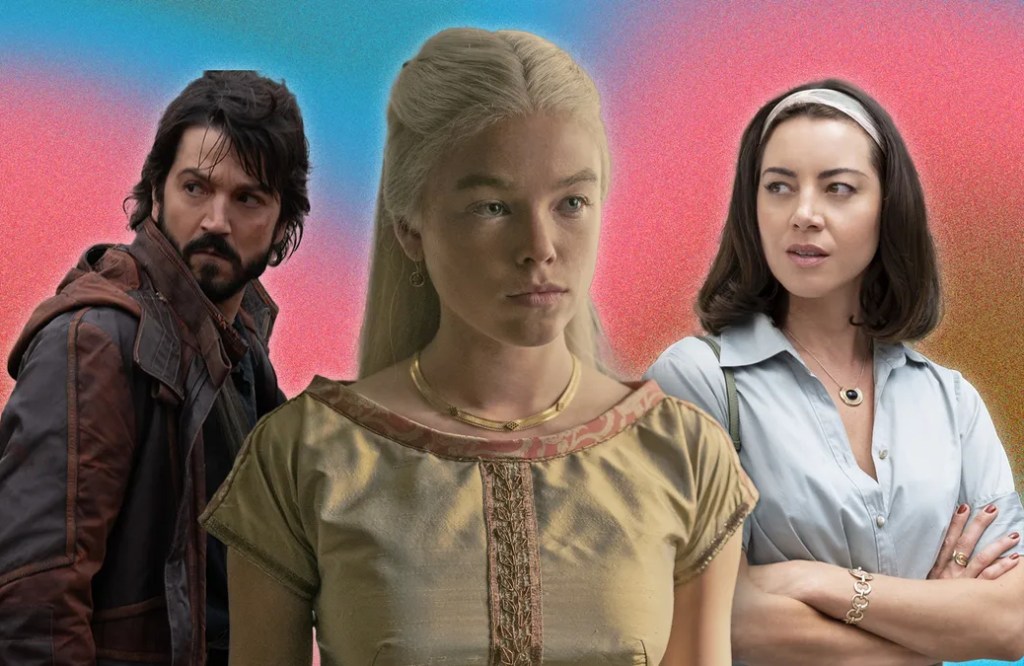
A round-up of the best year for television in a long time, from off-the-wall dark comedies to mind-bending sci-fi. Despite the intense competition, five shows stood apart from the crowd.
5. Bad Sisters
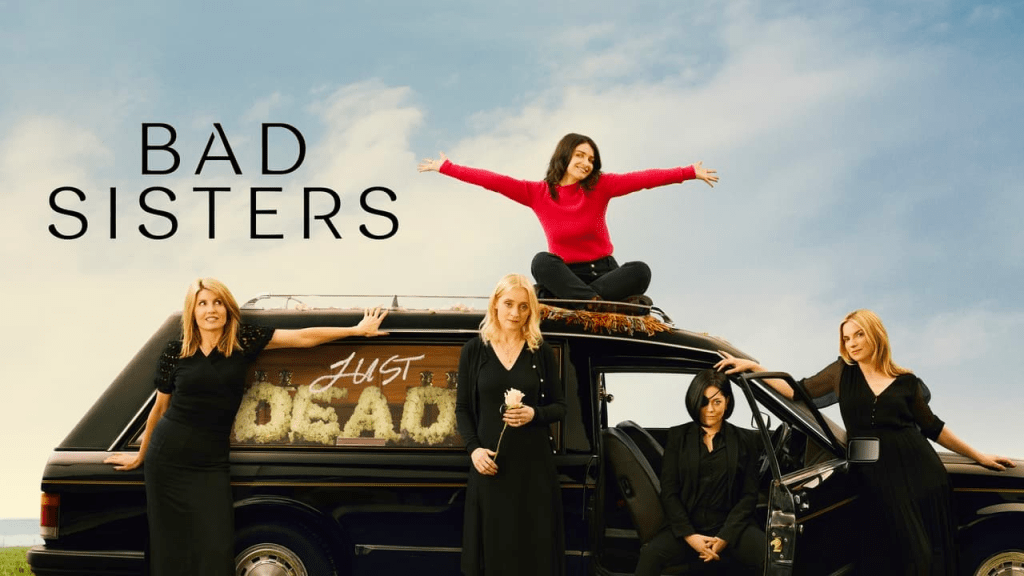
A darkly funny tale of five Irish sisters determined to look out for each other – even if that means murder. Sharon Horgan (from This Way Up and Catastrophe) stars as the oldest of the Garvey sisters and also writes this fantastic and strangely heart-warming series. One of her sisters, Grace (Anne-Marie Duff), is married to a vile man, ‘J.P’ (Claes Bang), who turns up dead in the first episode. The rest of the season is a retrospective whodunnit where the audience becomes absolutely commited to J.P’s karmic retribution.
Each episode keeps you on tenterhooks, even when you know it’s too early to reveal who killed the bastard. When will the sisters decide the only way out for Grace is to bump off her vindicative, nasty husband? Who will succumb first? What morbid comic mishaps are we in store for next? Aside from being a genuinely enjoyable watch, the show is an ode to the bottomless love of family. The Garvey sister dining table conference will become a staple of your week, where wine, bickering and memories are shared as easily as murder plots. The sisters’ fiercely close bond is embodied by the glorious landscapes of Dublin, their home city and the capital of Ireland (which doesn’t get nearly enough screen time, judging by these panoramas). Like their childhood home set on a stunning hilltop where Eva Garvey (Sharon Horgan) still lives and the ‘forty foot’ – a pier where the brave sisters dive into the perishing Irish Sea all year round.
There’s no denying that Bad Sisters drags a little towards the end, it could have been trimmed down an episode or two and the pacing would have been better for it. But seeing how J.P. meets his end is so immensely satisfying, the extra wait feels well worth it.
4. The White Lotus
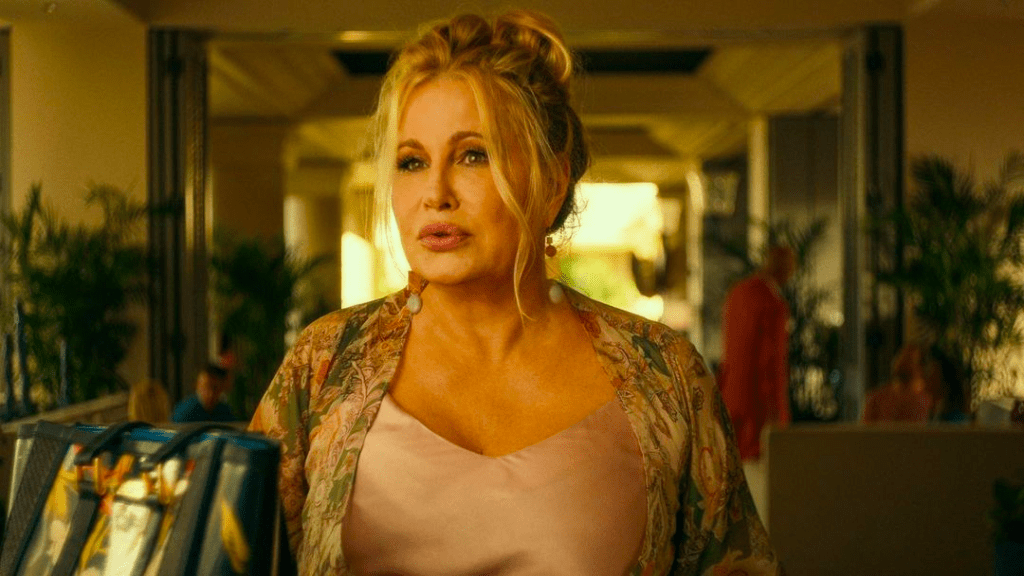
An off-beat, dark comedy and sprawling relationship drama set in an exclusive Italian resort. Season 2 begins in a mirror image of its predecessor – a dead body from the uber-wealthy patrons. We then rewind a week to see how the unfortunate soul met their end. The cast of characters centres on three main groups of hotel guests: a son, father and grandfather looking to explore their Italian heritage; two couples connected by an old college friendship/rivalry and a woman on a romantic break with her husband. Sounds innocent enough, right?
The series’ main strength is its characters (penned by Mike White who also gave us the revelatory Enlightened). The kind of people who endear themselves to you and grate on you in equal measure. One perfect example is the only returning face from the first series – Tonya McQuoid (Jennifer Coolidge). In another writer’s or actress’ hands, Tonya would be deeply unlikeable: a spoiled brat billionaire with no self-awareness and emotional diarrhoea, but we see a different side of her. We empathise with her deep-rooted pain and inability to maintain the relationships she craves. Plus, she is so damn hilarious you would forgive the woman anything. Everyone gets the same, nuanced treatment: the unfaithful husband Dominic (Michael Imperioli) who sits on his bed starting at pictures of his family in despair; glamorous and superficial Daphne (Meghann Fahy) who knows exactly how to craft her life to be happy and the sweet local girl who wants to sing and steps on quite a few toes to get there (Mia played by Beatrice Grannò).
The second season retains the awkwardness and intensity of the first season while adding more suspense, more realistic dialogue and cinematically outstanding shots (an imagined infidelity is replayed in the suspected spot before vanishing into thin air, feeling as real yet as illusory as paranoia does). Learn about lust, love, infidelity and deceit set alongside raging intergenerational warfare and, most importantly, lots and lots of pasta.
3. Severance
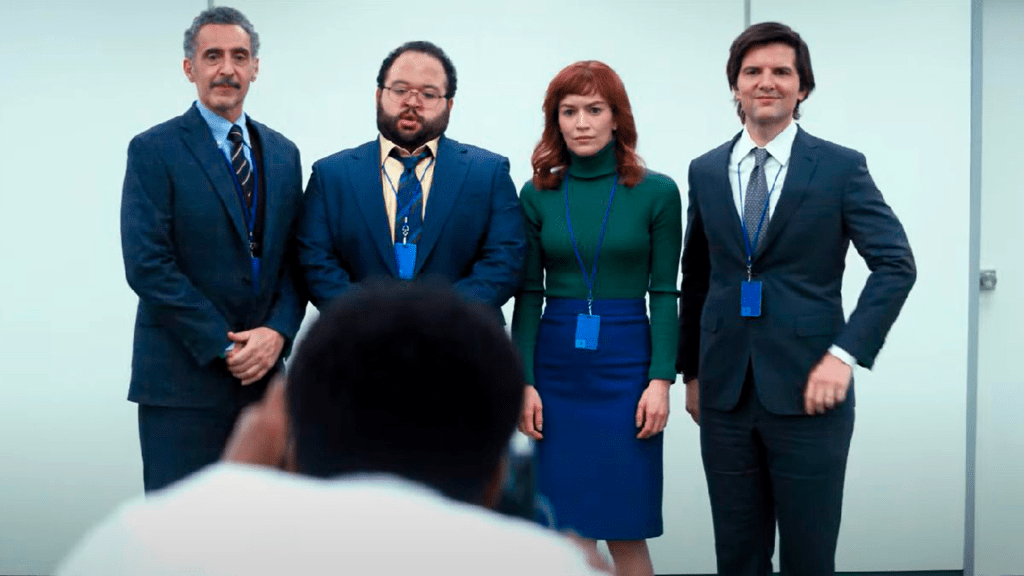
Psychological science fiction at its finest – the work at an American biotech corporation, Lumon Industries, is so secretive employees must have their working self ‘severed’ from their personal self. A brain chip guarantees what happens in the office stays in the office and, crucially for our haunted protaganist Mark (Adam Scott), all personal memories are left outside too. This main conceit drives the plot in some brilliant and bizarre directions and raises tantalizing questions: why would someone choose to live this way and at what cost? What on earth are Lumon employees doing all day? What is a waffle party? (hint: waffles might not be the only thing on the menu).
The total separation of work and personal memories does not make the company any more loose-lipped about the purpose of the Macrodata Refinement (MDR) division where Mark is based. As a viewer, prepare to be baffled and guess along with the characters as they try to draw links between the mysterious disappearance of Petey, Mark’s former best friend and colleague, the maze-like office layout and who they are ‘on the outside’.
The tone of Severance makes this show utterly unique: odd and sardonic; upbeat and sinister; child-like and morose. Without giving too much away, Severance really make the most of its themes and its heavyweight cast including Patricia Arquette, Zach Cherry, John Turturro and Christopher Walken. The world-building is phenomenal – the town and office environment are completely believable, if off-kilter – and the series builds to a very satisfying finale that serves up just enough answers, while still leaving plenty for Season 2 to get its teeth into.
2. House of the Dragon (Game of Thrones)
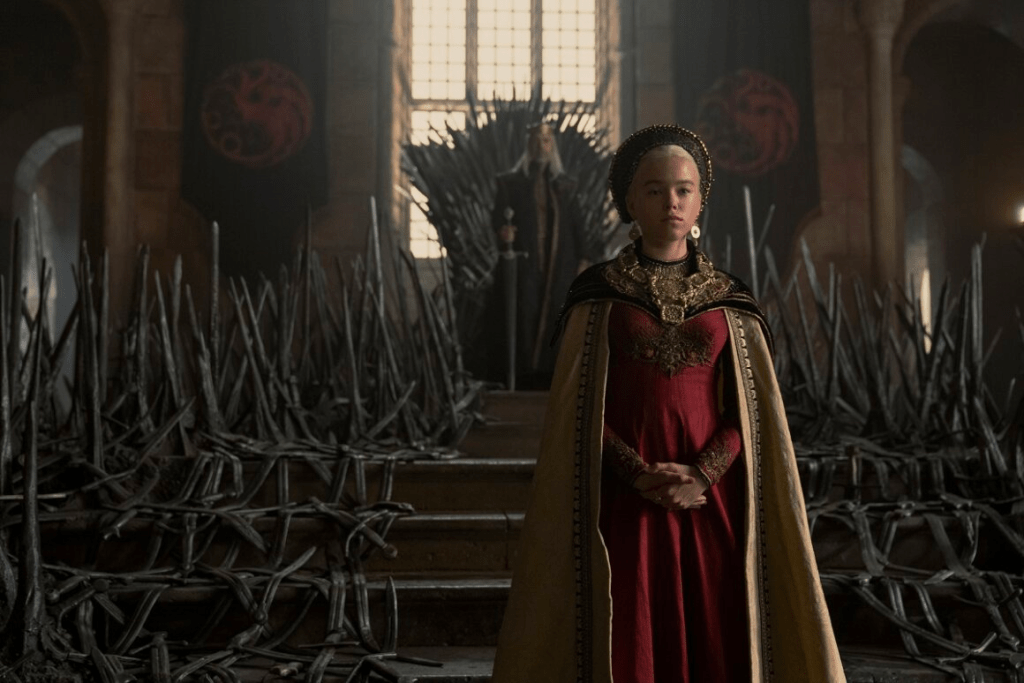
The show that popularised medieval fantasy, dragons and incest is back on form. Gone are the days of mile-wide plot holes and lazy dialogue and restored is the acrobatic political manueavring that made the parent series so popular. Set 200 years before Game of Thrones, this series follows the interpersonal dynamics and conflict of House Targaren. Viserys Targaren (Paddy Considine) has held the throne for decades in peace and prosperity but is tortured by his desperation for a male heir. While those around him might recognise the savvy politics and self-belief of his only child and teenage daughter, Rhaenyra, (Milly Alcock), her father’s obsession with a male heir (more than a few historical comparisons there) creates a chain of unintended consequences.
Season 1 takes place over 17 years, with a time jump roughly halfway through where both Rhaenyra (Milly Alcock) and her best friend Alicent (Emily Carey) age into their late twenties. The time jump has come in for criticism but this season is essentially a prologue to the main events of Fire and Blood, the George R.R. Martin book the series is based on, and there was a hell of a lot of narrative ground to cover. Even with the time jump, there is significant investment in narrative arcs where romances build, connections sour and regrets coalesce over half a lifetime. It is a testament to the quality of the acting and casting that the younger actresses completely inhabit their roles, but it’s now impossible to separate Rhaenyra and Alicent from Emma D’Arcy and Olivia Cooke.
The script for House of the Dragon is sharp and the smaller collection of houses vying for power produces a more centralised narrative and a tighter plot. Gone too is the endless sexual violence as a plot device to ‘empower’ women that D.B. Weiss and David Benioff were so fond of in Game of Thrones and brought to the fore are the other very real dangers and battles women face in an era without modern medicine. You even to get to see Doctor Who (Matt Smith) transform into the ultimate badass to play the king’s brother, Daemon – seemingly inspired by Buffy’s Spike, right down to the hair bleach. The series won the Golden Globe for best drama series and it’s easy to see why as House of the Dragon gives us one of the best television scenes in recent memory with no more action than a man walking to a chair. Underpinning much of the story is the familial tenderness at the heart of Targaren power plays: for all their sidesteps and aggressions, King Viserys, his brother, his daughter and his cousin, Rhaneys (Eve Best) are bound by a shared blood and legacy. Come for the dragons, stay for the family-political drama.
1. Andor
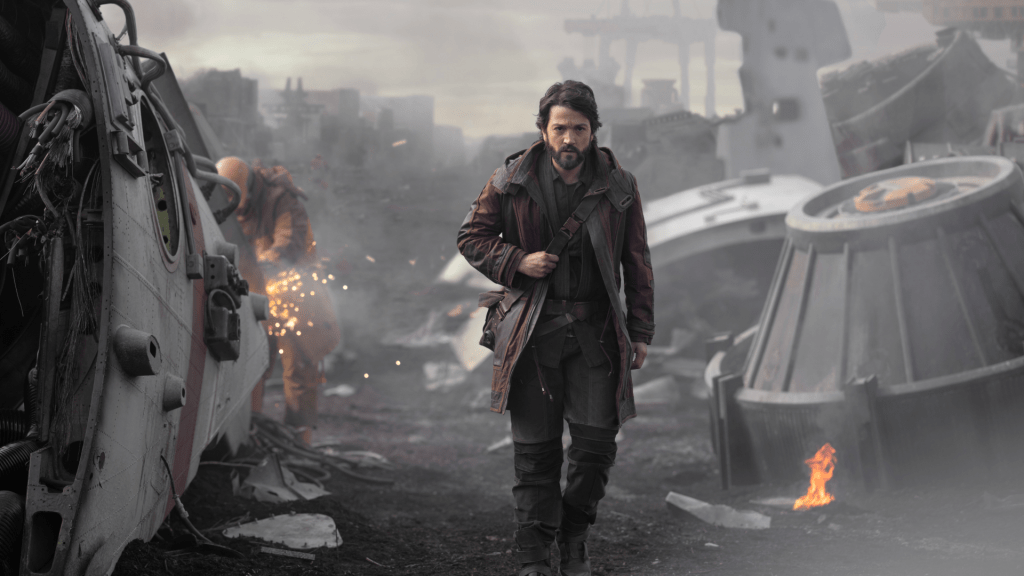
You might have heard Andor described as ‘gritty’ Star Wars or as the only thing Disney hasn’t managed to f-up in the Star Wars universe since it took the reins. But Andor is so much more than that, it succeeds entirely on its own terms.
Cassian Andor (played to perfection by Diego Luna) is the anti-hero of this simmering political space drama. The series opens onto a Bladerunner-style dystopia – a dark, dreary urban metropolis – and immediately the world feels real and lived in. As does every setting that follows , from the warm colours and metallic industry of Cassian’s home planet, Ferrix, to the icy cold, grand interiors of the Empire’s capital, Coruscant. The series charts Cassian’s journey from part-time thief to rebel and examines exactly what it takes to get him there. Other key players are already wholeheartedly committed to the cause – Luthen (Stellan Skarsgård), part of the Rebel Alliance who masquerades as an antiques dealer on Coruscant; Mon Mothma (Genevieve O’Reilly), a wealthy Imperial senate member hiding in plain sight while funding the Alliance; and active rebels on the ground including Vel Sartha (Faye Marsay, better known for playing the Waif in Game of Thrones). The series meditates on the weighty themes of power, oppression and war but unlike the original Star Wars trilogy, which had the moral ambiguity of a bedtime story, Andor is never satisfied with easy answers. The rebels do not follow a hero’s arc, the suffering and sacrifice of waging war (even against an oppressive force) are laid bare towards the end of the narrative.
Another crucial part of the show’s success is its ability to let the story breathe. Central plot points other series might have wrapped up in one (unsatisfying) episode are given the space and time to evolve over several hours – three whole episodes are spent inside a prison. This infallible sense of pacing in combination with naturalistic dialogue makes every character into a living, breathing person. None more so perhaps than Mon Mothma whose pitch-perfect political performance conceals her illicit rebel activites from even her own family. It is a delight watching Genovieve O’Reilly flip from charismatic pleasantries to treasonous talk all behind the veil of a smile.
The final piece to set Andor apart – and why it ultimately claims the top spot – is how the series transcends the screen. This is a story which speaks to the maxim – ‘absolute power corrupts absolutely’. The Empire is a faceless, brutal piece of machinery seeking only to maintain and expand its own power. Actions that would be condemned if committed by individuals are sacrosanct when committed by The Empire – all in the service of an ordered universe. Of course, the concerns of the citizens The Empire is building this ordered world for are nowhere to be found. After decades of corporation-first politics and as living standards begin to decline, the parallels are easy to find and the power to forge a different path might be exactly the message we all need to hear, from the most unlikely of places.
 Show. Interpreted.